Synthetic Track Construction: How to Choose the Right Surface System
- Share
- publisher
- FieldsMaster Technical Team
- Issue Time
- Oct 10,2026
Summary
Compare synthetic athletics-track systems and choose the right surface build-up: in-situ poured, prefabricated and hybrid methods, the role of EPDM granules, PU binder and SBR base layers, how to compare a track construction cost by layer and labor, and the standards and test documentation to settle before ordering. Includes a material-quotation checklist for project owners, EPC contractors, stadium contractors, school-facility buyers, consultants and distributors.
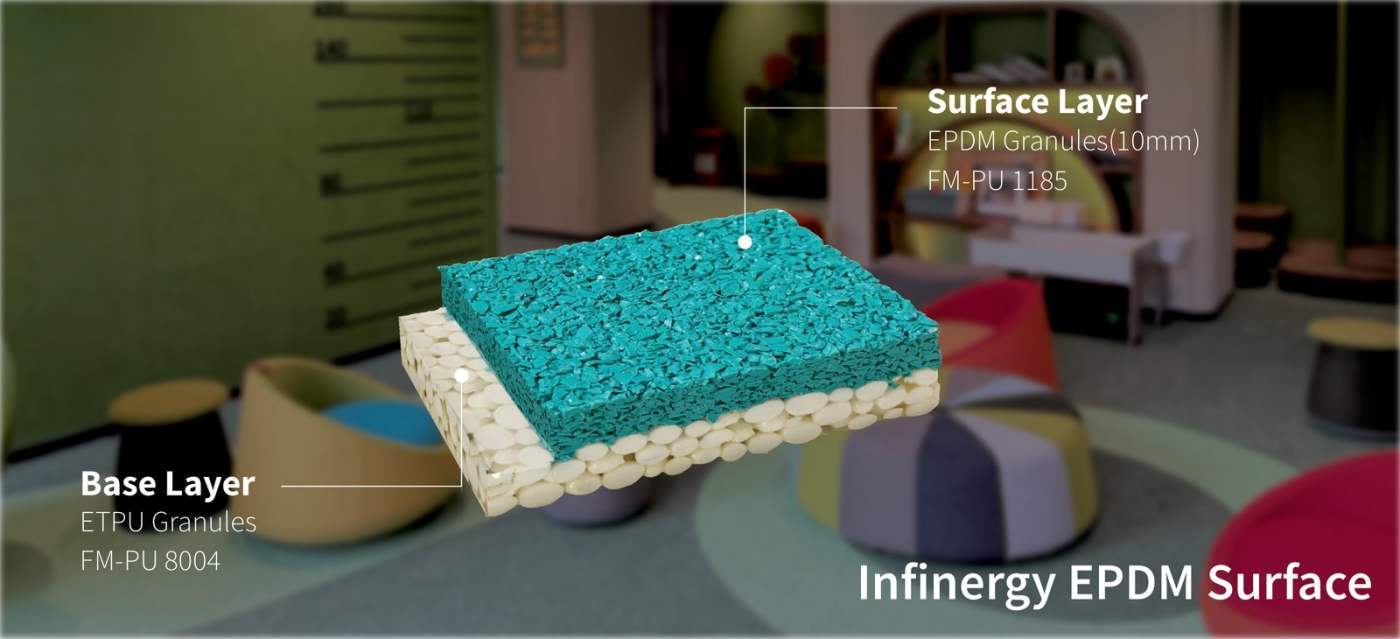
Synthetic track construction is often discussed as a site-construction decision, but the procurement outcome is decided much earlier: when the buyer fixes the surface system, Base Layer, Top Layer, color plan, EPDM granules, PU binder and material quantities in one scope.

A track can look similar at handover while using a very different material build-up. That is why project owners and EPC teams should begin with EPDM granule for running track, then match the proposed system to the performance brief, base condition, installation method and delivery schedule. For contractor-side coordination, see EPDM surfacing solutions for EPC contractors.
Quick answer: Synthetic track construction normally combines a prepared, drainage-capable base with a selected elastic layer and a visible surfacing layer. The system, not the color alone, determines which EPDM granules, PU binder, Base Layer materials, primer, line paint, labor steps and inspection items must be quoted. FieldsMaster can support material planning for a 10 mm one-layer EPDM surface, a 13 mm two-layer EPDM surface, a 13 mm spraycoat system or other project-specific structures. Use the EPDM material calculator for an initial EPDM, SBR and PU binder quantity discussion before finalizing the bill of quantities.
1. Synthetic Track Construction Methods: In-Situ, Prefab and Hybrid
The terms in-situ, prefabricated and hybrid describe different ways a track surface is supplied and assembled. Buyers should not treat them as interchangeable names. Each method changes the material list, logistics, site labor, joint treatment, repair approach and quality-control plan.
1.1 In-Situ Poured Systems
An in-situ system is mixed and installed on the prepared site base. Depending on the selected structure, it may use a one-layer EPDM surface, an SBR Base Layer plus an EPDM Top Layer, or a spray-applied upper layer. The material package should state the granule size, color, PU binder type, ratio, primer, layer thickness and expected installation method before purchase.
FieldsMaster running-track system references include:
- One Layer EPDM Surface, 10 mm: polyurethane primer and a 10 mm EPDM rubber granules layer with PU binder, finished with two-component PU line paint.
- Two Layers EPDM Surface, 13 mm: 8 mm SBR Base Layer plus 5 mm EPDM Top Layer, with polyurethane primer and two-component PU line paint.
- Spraycoat Running Track, 13 mm: 10 mm SBR Base Layer plus a 3 mm spray layer using 0.5 to 2.0 mm EPDM, EPDM powder and aromatic PU binder.
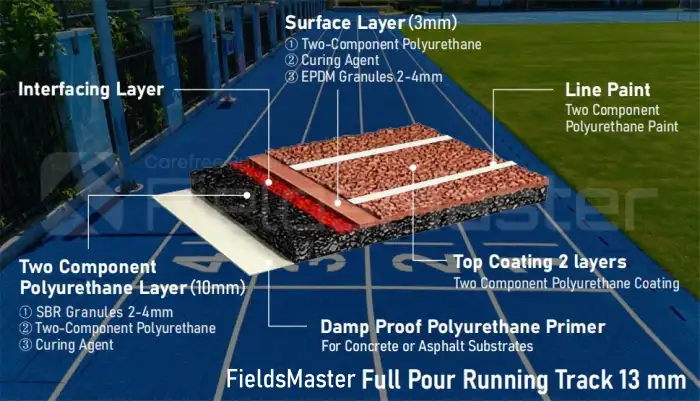
These structures are procurement references. The selected layer build-up must be confirmed against the project drawing, performance requirement, existing base, drainage, local requirements and installation method. For a fuller project-owner view of how track systems are chosen, see the EPDM running track surfacing complete guide.
1.2 Prefabricated Track Systems
A prefabricated system arrives as factory-made material that is installed and joined on site. The procurement emphasis moves toward roll dimensions, joint treatment, adhesive compatibility, cutting layout, transport handling and repair availability. Before comparing it with an in-situ option, ensure that the quotation uses the same base scope, edge treatment, line-marking scope and warranty boundary.
1.3 Hybrid Track Systems
A hybrid approach combines site-installed and factory-produced elements. The exact material scope depends on the specified product and track design. Buyers should request a layer schedule that clearly identifies which parts are factory-produced, which layers are installed on site, who manages joints or transitions, and how future repairs will match the original system.
| Method | Procurement focus | Site coordination focus | Repair-planning question |
|---|---|---|---|
| In-situ poured | Granules, PU binder, primer, Base Layer and mixing plan | Weather window, batch handling, paving and curing | Can the approved granule color and particle size be repeated? |
| Prefabricated | Roll or sheet format, adhesive, joints and transport | Cutting layout, joint execution and substrate tolerance | Can matching material and joint components be supplied later? |
| Hybrid | Factory elements plus site-installed material scope | Interface between systems, sequencing and quality control | Which party owns the transition and repair specification? |
2. Athletics Track Surface Materials: EPDM, PU, Tartan and Sandwich Systems
An athletics track surface is a system of materials, not one material name. EPDM granules are commonly relevant to the visible colored layer, while PU binder provides the adhesive matrix. Depending on the selected construction method, the system may also include SBR, ETPU, primer, coating and line paint.
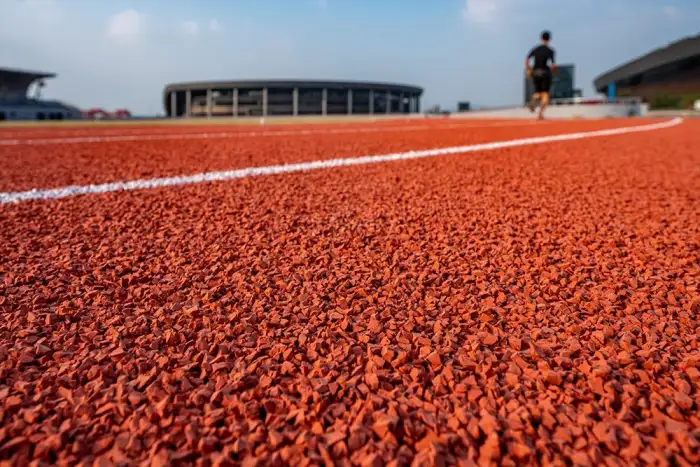
The term tartan track construction is often used in market searches for synthetic athletics-track projects, but the actual material scope must be checked from the system specification rather than assumed from a name. For a buyer, the useful question is: which layer is being purchased, what material is used in that layer, and how will the materials perform together under the project's use and installation conditions?
2.1 Material Roles to Confirm Before Ordering
| Material or layer | Role in the procurement discussion | Buyer check |
|---|---|---|
| Prepared base | Provides stable, suitable support for the surfacing system | Confirm strength, flatness, moisture, drainage and compatibility |
| Primer | Connects the prepared base and selected system | Confirm substrate compatibility and application conditions |
| SBR Base Layer | Can provide an elastic underlying layer in a two-layer or spraycoat structure | Confirm thickness, granule grade and PU binder requirement |
| EPDM Top Layer | Provides visible color and surface texture in selected structures | Confirm EPDM granules size, color, batch plan and PU binder pairing |
| PU binder | Binds granules and supports the specified layer build-up | Confirm aromatic or aliphatic option, layer position and exposure requirements |
| Line paint and coatings | Delivers markings and final surface details | Confirm color, application sequence and included scope |
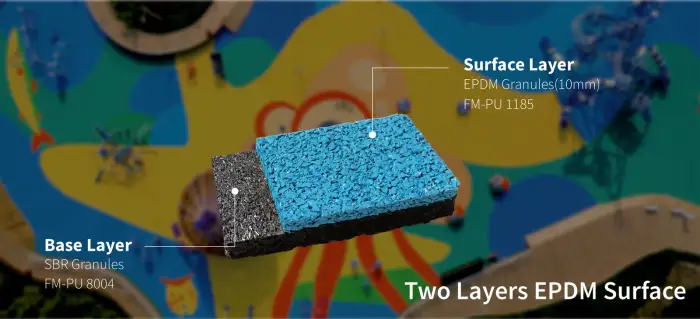
For sports-track material selection, review EPDM granules for running track applications alongside the running-track solution page. Buyers can also compare the EPDM running tracks complete guide when building a broader material brief.
3. Track Construction Cost Breakdown by Layer and Labor
A reliable track construction cost comparison does not begin with a single price per square meter. It begins by confirming whether every quotation includes the same base work, primer, elastic layer, EPDM Top Layer, PU binder, line marking, edge treatment, mobilization, installation loss, testing and site-protection scope.
Without a confirmed drawing and system specification, this article does not assign universal per-square-meter prices. Unit rates vary with project area, selected structure, existing-base condition, country, logistics, labor, weather protection and testing scope. Instead, use the following cost-breakdown framework to request comparable quotations.
| Cost group | What the buyer should ask to see | Common quotation risk |
|---|---|---|
| Base preparation and drainage | Repair, levelling, slope correction, moisture control and drainage interfaces | Base work excluded while surface materials are compared |
| Primer | Product type, consumption and substrate compatibility | Primer assumed but not priced or not matched to the base |
| Elastic and Base Layer | SBR or other material, thickness, binder and installation method | Thickness or binder consumption omitted from comparison |
| EPDM Top Layer | EPDM granules grade, color, particle size, thickness and PU binder ratio | Granule price quoted without defining the finished-layer scope |
| Line marking and details | Line paint, edge details, transitions and field-event markings | Markings and perimeter details treated as unpriced extras |
| Labor and site controls | Mixing, paving, compaction, spray or trowel work, curing protection and weather standby | Labor scope differs between quotations |
| Allowances and spares | Installation loss, sample approval, batch reserve and repair material | No allowance for on-site adjustment or future color matching |
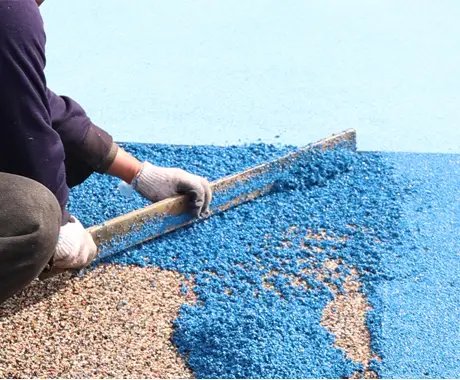
For an initial quantity check, submit the track drawing, total area, selected structure, layer thickness, color plan and delivery location to FieldsMaster. The material calculator can establish a first-pass EPDM, SBR and PU binder estimate; the final material list should then be checked against drawings and site conditions.
3.1 Base Layer Requirements for Synthetic Track Construction
A high-quality Top Layer cannot correct an unsuitable base. Before primer or Base Layer work begins, the project team should confirm base strength, flatness, cleanliness, moisture, drainage, slopes and compatibility with the selected surfacing system.
The practical procurement point is to assign each precondition to a responsible party before materials arrive. A material quotation should not be treated as proof that the existing asphalt or concrete base is ready. Record the base-review result, any repair scope, the primer choice and the acceptable installation window in the project handover plan.
4. Stadium Track Surfacing Standards and Test Reports
Stadium track surfacing standards, test methods and acceptance requirements are project-specific. Buyers should identify the applicable standard and testing plan before ordering, rather than attempting to retrofit compliance documents after installation.

A useful inspection plan may cover the following items where they are required by the project specification:
- Layer thickness or core samples at agreed locations.
- Adhesion or bonding checks, where specified for the selected system.
- Surface appearance, color consistency and marking alignment.
- Material batch identification, including EPDM granules and PU binder records.
- Test reports that identify the tested product, test method and scope.
- Documentation of base condition, weather conditions, installation sequence and curing protection.
FieldsMaster can provide material-level technical information and support the EPDM granules and PU binder portion of a project material file. For more technical reports, please contact FieldsMaster.
4.1 Climate Window and Construction Schedule
Track installation scheduling should include a review of temperature, humidity, rainfall, surface moisture and curing protection. These conditions affect primer application, material mixing, paving, spray or trowel work, line marking and the time before the surface can be opened.
For procurement, align the production plan, shipping schedule, batch sequence and installer availability with the verified site window. This reduces the chance that EPDM granules and PU binder arrive before the base is accepted or after the planned installation period has changed.
5. Plan Your Track Build with FieldsMaster
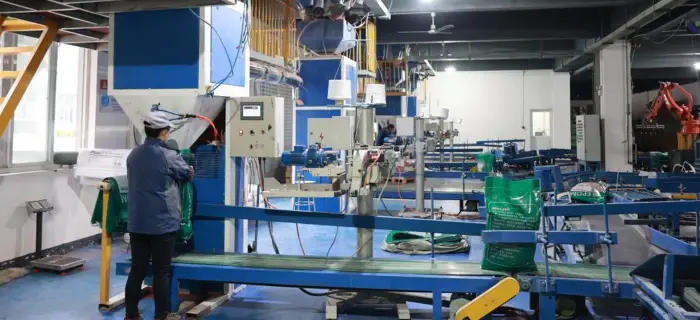
FieldsMaster supports the material side of synthetic track construction by coordinating EPDM granules, PU binder, particle-size range, color, batch planning and initial quantity inputs around the proposed surface structure.
For a project material review, provide:
- Track drawing and total surfacing area.
- Selected system or systems being compared.
- Base information and known drainage conditions.
- Planned Base Layer and EPDM Top Layer thickness.
- Preferred EPDM color, particle-size range and line-marking requirements.
- Delivery location, required date and phased-delivery plan.
- Any project-specific testing, documentation or acceptance requirement.
FieldsMaster can then organize a material quotation around the actual layer schedule instead of quoting a standalone granule price. For a system overview, use EPDM granule for running track; for contractor coordination, use EPC contractor solutions.
6. FAQ
What is the cheapest way to build a synthetic track?
The lowest unit price is not necessarily the lowest project cost. Compare quotations by the same layer scope: base preparation, primer, elastic or Base Layer, EPDM Top Layer, PU binder, line marking, edges, labor, curing protection and allowances. The most suitable system depends on the performance brief, existing base, site conditions and project requirement.
How long does synthetic track construction take?
The schedule depends on the track area, selected construction method, base readiness, weather window, curing conditions, labor plan and logistics. Confirm the production, delivery and installation sequence only after the system and site conditions are reviewed together.
What base is needed under a synthetic track?
The required base depends on the selected system and project specification. Before surfacing work, confirm strength, flatness, cleanliness, moisture, slopes, drainage and compatibility with primer and the proposed Base Layer or EPDM system.
Which EPDM granules should be used for an athletics track?
The EPDM granules choice should match the selected layer and system. Confirm particle-size range, color, batch plan, PU binder compatibility and Top Layer function before ordering. FieldsMaster can support this material review from the project layer schedule and drawing.
Before you place the order, check three figures. A track quotation that looks complete can still leave gaps that only appear once the crew is on site.
- PU binder quantity — calculated from granule volume, layer position and mixing ratio, not a rough allowance.
- Installation loss — stated as a project figure, since it moves with particle size, base condition, layer thickness, weather and crew practice.
- Packaging quantity — matched to actual consumption so the site is neither short of material nor left with surplus.
Any figure left open usually surfaces mid-installation, when a top-up delivery is slowest and most expensive. Send the track drawing, total area, selected structure and delivery location to FieldsMaster and receive a layer-by-layer material quotation within 48 hours.