How to Maximize EPDM Profit Margin and Optimize Granules Pricing for Sports Tracks
- Share
- Issue Time
- Jun 29,2026
Summary
This comprehensive guide offers an in-depth look into optimizing financial health within the sports track industry, specifically focusing on maximizing EPDM profit margins and strategizing granules pricing. It highlights EPDM (Ethylene Propylene Diene Monomer) as the superior choice for sports tracks due to its durability, safety features, weather resistance, and aesthetic versatility, emphasizing that understanding these benefits is crucial for justifying premium pricing. The article breaks dow
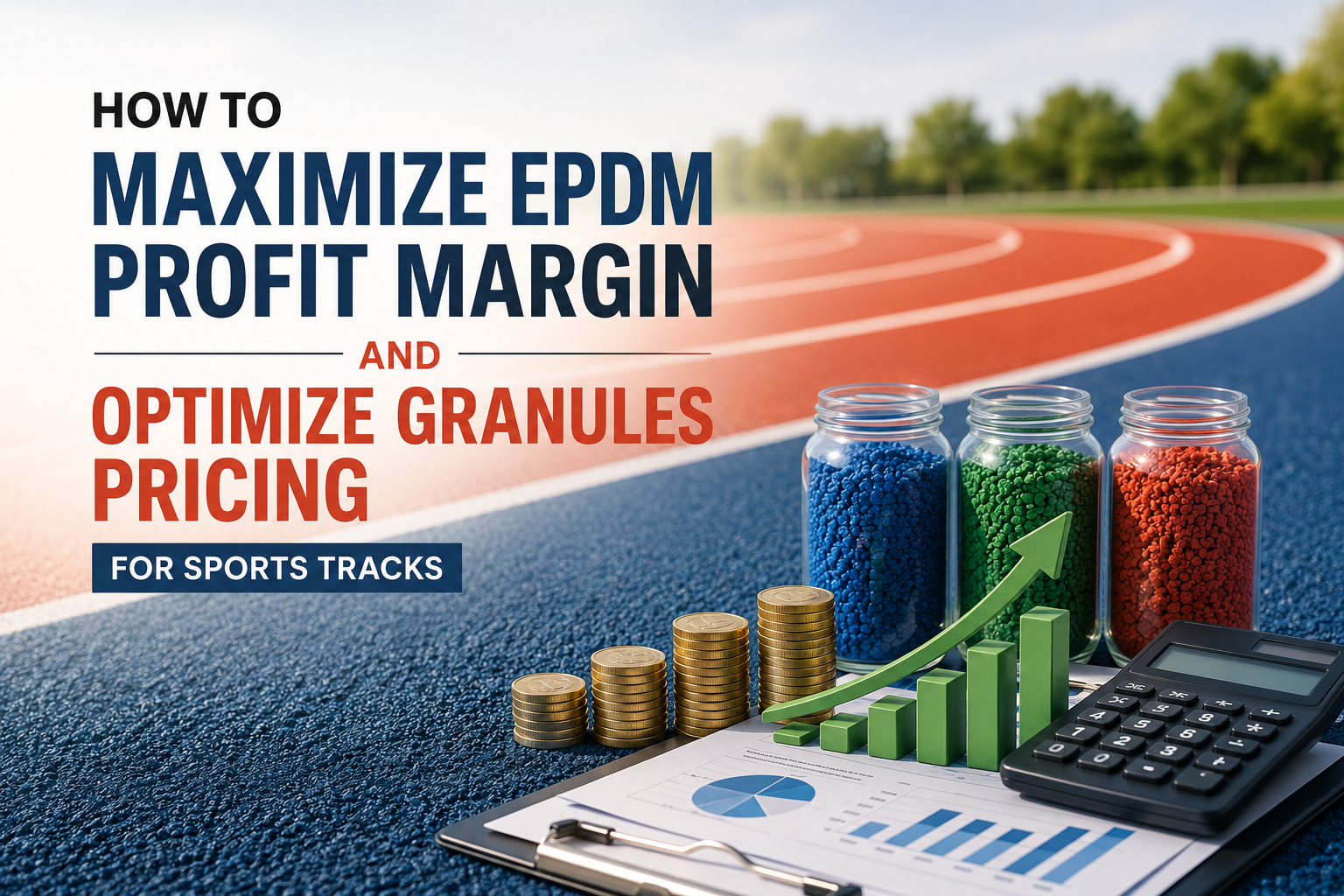
As someone working in the sports track industry, I know how important it is to get the most out of every project. This guide will share my insights on how we can improve our financial health. Today, we're going to dive into how to manage our EPDM profit margin and get smarter about granules pricing, especially for sports track installations. It's all about making sure our efforts pay off. My goal is to walk you through the key steps to not only understand our costs but also how to strategically boost our earnings and make our business thrive.
Key Takeaways
- Understanding EPDM is Fundamental: EPDM (Ethylene Propylene Diene Monomer) is the premier choice for sports tracks due to its exceptional durability, safety features, and weather resistance. Its elasticity provides excellent shock absorption, reducing athlete injuries, while its UV stability ensures color vibrancy over many years. A deep understanding of its properties is the first step toward accurately pricing projects and articulating its value to clients.
- Profit Margin is More Than Revenue Minus Costs: True profitability calculation involves a detailed breakdown of all expenses. This includes direct costs (materials like EPDM granules, binders, labor) and indirect costs (overhead like marketing, rent, administrative salaries, equipment depreciation). A precise formula—
Profit Margin = [(Total Revenue - Total Costs) / Total Revenue] x 100—is essential for financial clarity. Accurate estimation is not just a preliminary step; it is the cornerstone of a profitable project. - Multiple Factors Influence Pricing: Your final price and profit are shaped by a complex interplay of factors. Material costs for EPDM granules can fluctuate based on petroleum prices and supply chain dynamics. Labor efficiency directly impacts the bottom line; a well-trained, efficient crew can significantly reduce costs. Furthermore, market competition dictates pricing boundaries, while logistics and supply chain management can introduce unforeseen expenses or create opportunities for savings.
- A Strategic Profit Model is Non-Negotiable: To ensure profitability, you must develop a comprehensive costing framework. This starts with a detailed cost analysis for every project component. Pricing strategies shouldn't be uniform; they can be value-based (highlighting quality and longevity), competitive (aligning with market rates), or cost-plus (adding a standard markup). A successful model always incorporates a margin for overhead and desired profit, ensuring the business remains sustainable and grows.
- Benchmarking Provides a Competitive Edge: Regularly comparing your profit margins and pricing against industry averages is crucial. If the industry standard profit margin for specialty contractors is between 10-15%, and yours is significantly lower, it’s a clear signal to re-evaluate your cost structure or pricing. Analyzing competitors' pricing—not to undercut them, but to understand your value proposition—helps position your offerings effectively.
- Advanced Strategies Drive Growth: To move beyond basic profitability, focus on advanced tactics. Negotiate bulk purchasing discounts with your suppliers. Invest in training and technology to boost operational efficiency on-site. Offer value-added services like custom designs, extended warranties, or maintenance packages to justify premium pricing. The market is dynamic, so continuous monitoring of costs, competitor actions, and industry trends is vital for long-term success.
Unlocking the Core Principles of EPDM Profit Margin for Sports Tracks
To set the foundation for maximizing our profit margins, we first need to agree on the basics. Profitability isn't just a number; it's the result of understanding our materials, mastering our calculations, and executing with precision. This section breaks down the core principles I've learned and applied to make EPDM sports track projects consistently successful.
What EPDM is and Why It's a Go-To for Performance Sports Tracks
Before we can talk about profit, we must understand our product inside and out. EPDM, which stands for Ethylene Propylene Diene Monomer, is a high-density synthetic rubber. In my years in the industry, I've seen it become the gold standard for sports surfaces for several compelling reasons. Unlike materials such as asphalt or concrete, EPDM provides exceptional durability, safety, and performance.
Here’s why it’s my preferred material for high-performance tracks:
- Superior Safety and Performance: EPDM surfaces offer outstanding shock absorption, which is critical for reducing stress on athletes' joints and minimizing injury risks. This cushioning effect doesn't compromise performance; the surface remains firm enough for optimal energy return, providing a consistent and reliable experience for training and competition. Its textured surface also provides excellent slip resistance, even in wet conditions.
- Exceptional Durability and Weather Resistance: One of EPDM's most significant advantages is its resilience. It is highly resistant to UV radiation, extreme temperatures, and moisture. This means an EPDM track won't crack, fade, or degrade easily, even after years of heavy use and exposure to harsh weather. Its longevity translates to lower long-term maintenance costs for the client, a key selling point.
- Aesthetic Versatility: EPDM granules come in a vast range of vibrant, long-lasting colors. This allows for complete customization, from traditional track markings to intricate school logos and branding, which adds significant value for clients looking for a visually appealing facility. The color is integrated throughout the granule, ensuring it doesn't wear away with use.
- Low Maintenance: EPDM surfaces are non-porous and easy to clean. They don't require the constant sealing or repairs that other surfaces might, which represents a significant long-term cost saving for the facility owner.
Understanding these benefits is crucial because they are the foundation of your value proposition. When you can clearly articulate why EPDM is the superior choice, you can justify a premium price point. You're not just selling a track; you're selling safety, longevity, and performance. I encourage you to explore our product offerings to see the quality of materials we rely on.

My Approach to Calculating EPDM Profit Margin: The Fundamentals
Once you master the product, you must master the numbers. A surprising number of contractors struggle with accurately calculating profit margins, which leaves money on the table. My approach is meticulous because every percentage point matters.
The basic formula is simple: Profit Margin % = [(Total Revenue - Total Costs) / Total Revenue] × 100
The complexity, however, lies in accurately identifying all of your costs. These are broken down into two main categories:
| Cost Type | Description | Examples for a Sports Track Project |
|---|---|---|
| Direct Costs | Expenses that are directly tied to a specific project and can be easily traced back to it. | EPDM granules, polyurethane binder, SBR base materials, wages for the installation crew, equipment rental. |
| Indirect Costs | Also known as overhead, these are expenses necessary to run the business but not for a single project. | Office rent, administrative salaries, marketing, insurance, utilities, vehicle maintenance. |
A common mistake is to only consider direct costs when calculating profitability, leading to an inflated sense of a project's success. To get a true picture, you must calculate both Gross Profit Margin (which excludes overhead) and Net Profit Margin (which includes all costs).
- Gross Profit Margin: This tells you how efficiently you are managing your project-specific costs (labor and materials).
- Net Profit Margin: This reveals the true bottom-line profitability of your business after all expenses are paid.
For specialty contractors like us, a healthy net profit margin is often in the 5-12% range, though top performers can achieve more. Understanding this distinction is the first step toward building a sustainable financial model.
The Role of Accurate Estimations in Securing Our Overall Profitability
Accurate cost estimation is the bedrock of a profitable construction project. It’s not just about winning a bid; it’s about winning a bid that actually makes you money. In my experience, inaccurate estimates are the single biggest threat to profitability.
Here's why precision is non-negotiable:
- Avoiding the Underbidding Trap: It can be tempting to submit a low bid to secure work, especially in a competitive market. However, underbidding is a dangerous game. If your actual costs exceed your bid, your firm absorbs the loss, destroying your profit margin and potentially damaging your reputation. A project you win at a loss is not a win at all. In the worst-case scenario, you're essentially paying the client to do the work for them.
- Informed Decision-Making: An accurate estimate allows project managers and stakeholders to make sound decisions about resource allocation and scheduling. It provides a clear financial roadmap, helping to mitigate risks before they evolve into costly delays or budget overruns.
- Building Credibility and Trust: Consistently delivering projects on budget builds immense trust with clients and strengthens your reputation. Inaccurate estimates can lead to difficult conversations, change orders, and strained relationships. The initial "saving" from a low bid often proves to be an illusion for the client once all change orders and delay costs are factored in.
To improve accuracy, I rely on a combination of historical data from past projects, up-to-date supplier pricing, and specialized software. By thoroughly reviewing project documentation and understanding all client requirements, we can forecast expenses with a high degree of confidence. This meticulous planning is what separates profitable contractors from those who are constantly struggling. It ensures we not only complete the project but do so with our financial health intact.
Decoding Key Factors That Influence Our EPDM Distribution Earnings and Granules Pricing
Achieving a healthy profit margin is more complex than simply marking up initial costs. It requires a deep understanding of the external and internal forces that can impact our bottom line. In my experience, four key areas directly influence our distribution earnings and how we price our granules: material costs, labor efficiency, market competition, and logistics. Mastering these is essential for financial success.
Understanding Material Costs: How EPDM and Granules Impact Our Bottom Line
The single largest direct cost in any sports track project is the material itself, primarily the EPDM granules and the polyurethane binder. These costs are not static; they fluctuate based on global market forces that are often beyond our control.
Several factors influence the price of EPDM:
- Petroleum Prices: EPDM is a synthetic rubber derived from petrochemical feedstocks like ethylene and propylene. As crude oil prices rise or fall, the manufacturing cost of these polymers follows suit, directly impacting our purchase price.
- Global Supply and Demand: The demand for EPDM extends far beyond sports tracks; it's a critical component in the automotive industry for seals and hoses and in construction for roofing membranes. A surge in demand from these larger sectors can tighten supply and drive up prices for everyone.
- Energy and Transportation Costs: The production of EPDM granules is an energy-intensive process. Therefore, rising energy prices increase manufacturing costs. Similarly, higher fuel and shipping rates add to the final delivered cost of materials.
Given this volatility, simply applying a standard markup is risky. I make it a practice to get real-time quotes from suppliers for each major project rather than relying on outdated price lists. This ensures our bids reflect current market realities. Building strong relationships with multiple suppliers also provides a buffer, allowing us to source materials more competitively and avoid being locked into a single provider's price hikes.
Efficiency in Labor and Installation: A Direct Path to Greater Distribution Earnings
After materials, labor is the next most significant expense and the area where we have the most direct control. In construction, labor inefficiencies can be a massive drain on profitability, with some studies suggesting wasted labor can account for a significant portion of project costs. Optimizing labor productivity is not about making crews work harder; it's about working smarter.
I focus on these core strategies to boost efficiency:
- Investing in Training: A well-trained crew that understands the nuances of EPDM installation works faster, makes fewer mistakes, and ensures a higher quality finish. Investing in continuous training on the latest techniques and equipment pays for itself through reduced rework and increased productivity. A mere 10% increase in workforce training can boost productivity by a significant margin.
- Proper Planning and Communication: Efficiency starts long before the crew arrives on-site. Clear communication, detailed project plans, and effective scheduling prevent downtime. Ensuring materials and equipment are ready when needed eliminates the costly problem of an entire crew waiting idly. Daily check-ins help identify and resolve obstacles before they cause major delays.
- Using the Right Technology: Modern tools, from advanced laser-guided pavers to project management software, can dramatically streamline the installation process. These technologies help improve accuracy, reduce manual labor, and provide real-time tracking of project progress, allowing for better decision-making.
Ultimately, an efficient installation team not only saves on labor costs but also enhances your reputation. Timely project completion and high-quality work lead to satisfied clients and more business opportunities.
Market Dynamics and Competition: Shaping Our Granules Pricing Strategies
We don't operate in a vacuum. The sports flooring market is competitive, and our pricing strategies must reflect this reality. The U.S. sports flooring market is a multi-billion dollar industry and is projected to continue growing, driven by an increased focus on athlete safety and investments in sports infrastructure. Understanding your position within this market is key to pricing effectively.
Here's how I approach market and competitor analysis:
- Know Your Competitors: I regularly analyze the bidding patterns of key competitors. This involves looking at who wins bids, at what price points, and on which types of projects. This analysis isn't about blindly matching the lowest price, but about understanding their strategy. Some may bid low to fill their schedule, while others might focus on premium projects where quality is the main driver.
- Differentiate on Value, Not Just Price: Instead of racing to the bottom, I focus on highlighting what makes our service superior. This could be our use of higher-quality, more durable materials, our experienced and certified installation teams, our ability to deliver complex designs, or our excellent track record shown in our portfolio of completed projects. When clients understand the long-term value you provide, price becomes a less sensitive factor.
- Stay Informed on Market Trends: The rising popularity of certain sports and increased funding for public and school athletic facilities are key growth drivers. Staying on top of these trends can help you anticipate demand and position your company to capitalize on new opportunities. For instance, the demand for multi-purpose facilities requires versatile flooring solutions, which is a key strength of EPDM.
By combining market intelligence with a strong value proposition, we can set prices that are both competitive and profitable. This is also where strategic partnerships can be invaluable, and we are always open to discussing opportunities with those interested in our leading supplier program.
Logistics and Supply Chain Management: My Take on Cost Controls
An often-underestimated factor in profitability is logistics and supply chain management. The process of getting materials from the manufacturer to the job site is fraught with potential costs and delays. A single disruption can halt a project, leading to cost overruns from idle labor and equipment.
My approach to logistics focuses on resilience and transparency:
- Diversify Your Suppliers: Relying on a single supplier, especially an overseas one, creates significant risk. I build relationships with a mix of national and regional suppliers to mitigate the impact of disruptions caused by everything from shipping delays to geopolitical issues.
- Transparent Costing: Many suppliers embed transportation costs into the material price, a practice known as "delivered free to site." This lack of transparency makes it impossible to know if you're getting a good deal on shipping. I always request that material costs be specified separately from transport, which opens the door to arranging our own logistics at a potentially lower cost.
- Proactive Planning: Effective supply chain management is about planning ahead. This means ordering critical materials well in advance, especially those with long lead times, and having contingency plans in place for potential shortages or delays. Modern construction management software can provide real-time visibility into the supply chain, helping to track orders and anticipate problems.
Managing the supply chain proactively turns a potential liability into a competitive advantage. It ensures materials are on-site, on time, and within budget, keeping the entire project on track and protecting your profit margins.
Crafting a Winning Profit Model: Calculating Your EPDM Profit Margin and Optimizing Granules Pricing
Theory is one thing; putting it into practice is another. A truly effective profit model is not just a spreadsheet; it’s a strategic tool that moves your business from reactive pricing to proactive profit planning. It involves building a detailed costing framework, choosing the right pricing strategies, and ensuring every single bid accounts for all costs and the profit you need to thrive. Let’s get into the specifics.
Developing an Accurate Costing Framework for EPDM Sports Track Projects
An accurate costing framework is the cornerstone of profitability. Its purpose is to leave no expense untracked. Over the years, I've refined my framework to move beyond simple spreadsheets to a more dynamic cost database. This is a living document that gets updated after every project.
Here's my process for building and maintaining this framework:
- Gather Comprehensive Data: A database is only as good as the data it contains. I pull information from multiple sources: historical project data, supplier price lists, subcontractor quotes, and industry benchmark reports. Creating a reliable database requires effort, but it's an investment that pays off on every future bid.
- Establish a Clear Cost Structure: Raw data needs organization. I classify all costs using a standard system (like CSI MasterFormat divisions) to ensure consistency. Costs are broken down into granular detail:
- Unit Costs: Individual line items like cost per pound of EPDM granules, cost per gallon of binder, or hourly labor rates.
- Assemblies: Grouped costs for a complete task, such as the total material and labor cost per square foot of a spray-coat system.
- Standardize and Validate: Every entry into the database follows a standard format, including units of measure, labor hours, and date of entry. This data is reviewed and validated before being added to ensure its accuracy. I make it a habit to update material prices at least quarterly, or more frequently during periods of market volatility.
- Tag Data for Analysis: I tag all data by region, project type (e.g., high school vs. university), and system type (e.g., full pour vs. sandwich). This allows me to analyze trends and generate highly accurate estimates for specific scenarios.
This systematic approach transforms estimating from guesswork into a data-driven science. It ensures that when I prepare a bid, I'm working with numbers that reflect reality, not outdated assumptions.
Strategic Approaches for Setting Profitable Granules Pricing
With a solid costing framework in place, you can move on to the more strategic element: pricing. There are several pricing models in the construction industry, but I've found the most success by blending two main approaches: Cost-Plus Pricing and Value-Based Pricing.
- Cost-Plus Pricing: This is the most straightforward method. You calculate your total project costs (direct materials, labor, and allocated overhead) and add a predetermined percentage for profit. For example, if total costs are $250,000 and you aim for a 15% profit margin, you add $37,500. This model is transparent and ensures your costs are covered. However, it can leave money on the table if the client perceives the value of your work to be much higher.
- Value-Based Pricing: This strategy sets the price based on the perceived value to the client, not just your costs. If you are known for exceptional quality, superior durability, and can demonstrate a lower total cost of ownership for the client over the track's lifespan, you can command a higher price. This requires a deep understanding of the client's needs and a strong brand reputation, but it often leads to significantly higher profit margins.
My preferred strategy is to use cost-plus as my baseline to ensure profitability and then adjust upward using value-based principles. I determine what sets my service apart—be it our expert crew, our use of premium materials, or our stunning finished case studies—and price that added value accordingly. This flexible approach allows me to remain competitive while maximizing earnings on every project.
Integrating Overhead and Desired Distribution Earnings into Our Pricing
This is where many contractors falter. Failing to accurately account for overhead and build in a target profit margin means you're working just to keep the lights on, not to grow. Every single bid must carry its share of the company's indirect costs.
Here’s how to do it right:
- Calculate Your Annual Overhead: First, add up all your indirect costs for the last 12 months. This includes everything not billed to a specific job: office rent, administrative staff salaries, insurance, vehicle payments, marketing, and software subscriptions. Be thorough—small costs add up.
- Determine Your Overhead Rate: The most common method is to calculate your overhead as a percentage of your total annual revenue or direct costs. For instance, if your annual overhead is $200,000 and your total revenue was $1,000,000, your overhead rate is 20%. This means that 20 cents of every dollar earned must go toward covering overhead.
- Apply Overhead to Each Bid: Once you have your rate, apply it to every estimate. If your estimated direct costs for a project are $180,000 and your overhead rate is 20% of revenue, you need to build in an additional amount to cover this.
- Add Your Target Profit Margin: This is the most critical step. After covering all direct and indirect costs, you must add the profit you want to make. A common rule of thumb in construction is the "10-10 rule," which suggests aiming for 10% overhead coverage and a 10% profit margin. In today's market, I believe a healthy target net profit margin for a specialty contractor should be between 8% and 15%. Anything less leaves no room for error.
Let’s be clear: profit is not a dirty word. It is the reward for the risk you take, the expertise you provide, and it is the fuel for your company's growth and stability.
A Simple Calculation Example: Visualizing Our Potential EPDM Profit Margin
Let's put this all together from an owner's perspective. Imagine a client—a high school—wants to install a new, standard 400-meter, 8-lane running track. They are focused on the investment and want to understand the long-term value and potential return.
Project Scope: Standard 400m, 8-lane track (approx. 5,000 sq. yards or 4,180 sq. meters).
Step 1: Estimate Direct Costs
| Item | Quantity | Unit Cost | Total Cost | Notes |
|---|---|---|---|---|
| Sub-Base & Asphalt | 5,000 sq. yd. | $40/sq. yd. | $200,000 | Includes excavation, grading, drainage, and paving. |
| EPDM Granules (Top Layer) | 25,000 lbs | $1.50/lb | $37,500 | Premium, UV-stabilized colored granules. |
| SBR Granules (Base Layer) | 100,000 lbs | $0.45/lb | $45,000 | Recycled rubber for shock absorption. |
| Polyurethane Binder | 30,000 lbs | $2.00/lb | $60,000 | Binds the granules together. |
| Direct Labor | 800 hours | $75/hr | $60,000 | Includes wages, taxes, and benefits for the crew. |
| Equipment Rental | Project | lump sum | $12,500 | Pavers, mixers, rollers. |
| Subtotal Direct Costs (COGS) | $415,000 |
Step 2: Calculate Overhead and Profit
- Overhead: Let’s assume your company's overhead rate is 15% of total revenue.
- Desired Net Profit Margin: You're targeting a healthy 12% net profit.
Step 3: Determine the Final Bid Price
This requires a bit of algebra, since overhead and profit are based on the final price (which we don't know yet). Let P be the final price.
- Direct Costs = $415,000
- Overhead = 0.15 * P
- Profit = 0.12 * P
The formula is: P = Direct Costs + Overhead + Profit P = $415,000 + (0.15 * P) + (0.12 * P) P = $415,000 + 0.27 * P P - 0.27 * P = $415,000 0.73 * P = $415,000 P = $415,000 / 0.73 P = $568,493
Your final bid to the client would be approximately $568,500.
Step 4: The Owner's ROI Perspective
Now, how do you justify this price to the high school? You frame it as an investment.
- Increased Revenue Streams: A new, high-quality track allows the school to host regional track meets, invitational events, and youth sports camps.
- Hosting 4 tournaments/events per year @ $5,000 revenue each = $20,000/year
- Renting the facility to local clubs for 20 weeks @ $500/week = $10,000/year
- Reduced Maintenance Costs: Compared to a lower-quality asphalt or latex track that needs frequent repairs and repainting, a premium EPDM track has lower maintenance costs, saving an estimated $10,000-$15,000 annually.
- Enhanced Safety & Lower Liability: A superior shock-absorbing surface can reduce athlete injuries, potentially lowering insurance premiums and liability risks. This is a non-quantifiable but hugely valuable benefit.
- School Prestige and Enrollment: A state-of-the-art athletic facility is a major draw for prospective students and athletes, boosting the school's reputation.
Calculating a Simple Payback Period:
- Annual Value Generated (Revenue + Savings): $30,000 (rentals/events) + $12,500 (maintenance savings) = $42,500 per year.
- Payback Period: $568,500 (Initial Investment) / $42,500 (Annual Value) = ~13.4 years.
Given that a well-maintained EPDM track can last 15-20 years or more before needing major resurfacing, the investment pays for itself within its lifespan and continues to generate value for years. For the owner, this transforms the cost from a simple expense into a long-term, revenue-generating asset with a clear ROI.
Benchmarking Our EPDM Profit Margin and Granules Pricing Against Industry Standards
Operating in isolation is a recipe for stagnation. To ensure our pricing is not only profitable but also competitive, we must regularly measure our performance against the wider industry. Benchmarking is a critical strategic exercise that provides context for our numbers. It helps us understand where we stand, identify areas for improvement, and validate that our pricing reflects the value we deliver.
What Industry Averages Reveal About Healthy EPDM Profit Margin
Profit margins in construction are notoriously thin, but they vary significantly by sector. Knowing the benchmarks for specialty contractors like us is the first step to evaluating our own financial health.
Here’s what recent industry data suggests for 2025-2026:
- Net Profit Margins: For general contractors, the average net profit margin often hovers between 5% and 8%. However, specialty trade contractors—those with specific expertise, like EPDM track installation—typically achieve higher margins, often in the 6.9% to 8.5% range. I consider a healthy, sustainable net margin to be between 8% and 12%. Anything below this range is a red flag that our pricing or cost structure needs immediate attention.
- Gross Profit Margins: Gross margins, which reflect profitability before overhead, are also higher for specialty trades, generally falling between 25% and 35%. This compares to 15-25% for general contractors. A strong gross margin indicates that we are pricing our direct costs (materials and labor) effectively and running our projects efficiently. If our gross margin is healthy but our net margin is low, it points directly to an overhead problem.
These benchmarks are not rigid rules but powerful indicators. If my company's net profit consistently falls below 8%, I know it's time to conduct a thorough review of our bids, job costing, and overhead expenses. These numbers provide an objective standard to measure against and help set realistic yet ambitious financial goals.
Analyzing Competitors' Granules Pricing Without Compromising Our Value
Analyzing competitor pricing is a delicate balance. The goal is not to engage in a race to the bottom but to understand the market landscape so we can position ourselves strategically. Since most competitors don't publish a detailed price list, this analysis requires some detective work and a focus on value.
Here are the ethical and effective methods I use:
- Analyze Public Bid Results: For public projects (like schools or municipal parks), bid results are often public record. I study who won the bid, what their final price was, and what the spread was between the highest and lowest bids. This reveals patterns in how competitors price certain types of projects.
- Focus on Value Proposition, Not Just Price: Instead of just looking at the final number, I analyze what each competitor offers. Do they use premium materials? Do they have a reputation for speed and quality? A low price often comes with compromises—lower-quality materials, less experienced crews, or poor project management. I document these differences to articulate why our potentially higher price provides better long-term value.
- Talk to Industry Partners: Suppliers, architects, and consultants often have a broad view of the market. Through regular conversations, it's possible to gather general intelligence on market pricing trends and competitor behavior without asking for specific, confidential data.
- "Mystery Shopping": When appropriate, posing as a potential customer to request a quote can provide direct insight into a competitor's pricing structure, sales process, and value proposition. This should be done ethically and with a focus on understanding their public-facing strategy.
The key is to use this information not to undercut, but to differentiate. If a competitor is consistently cheaper, I need to have a clear, compelling answer for why a client should choose us. This usually comes down to demonstrating superior durability, safety, and a better return on investment over the life of the track, supported by our excellent past projects.
Identifying Improvement Areas by Comparing Our Distribution Earnings to Market Leaders
Benchmarking isn't just about comparing your company to the industry average; it's about learning from the best. I identify market leaders—not just the biggest companies, but the most respected and consistently profitable ones—and analyze what they do differently. This strategic benchmarking helps uncover gaps in our own operations and points toward areas for improvement.
To do this, I focus on several Key Performance Indicators (KPIs) beyond just profit margins:
- Labor Productivity: How do market leaders manage their crews? Do they use specific technologies or training methods to improve efficiency? A high labor productivity rate is a direct driver of profitability.
- Project Win Rate: What percentage of their bids do they win? A very high win rate might suggest they are pricing too low, while a very low rate could mean they are being too aggressive. This helps calibrate our own bidding strategy.
- Change Order Rate: How often do their projects require change orders? A low rate suggests excellent initial planning and estimation—an area where we can all strive to improve.
- Customer Satisfaction and Repeat Business: Leaders often have a loyal client base. While this is hard to measure from the outside, online reviews, testimonials, and industry reputation provide strong clues. High customer satisfaction is a leading indicator of long-term profitability.
By identifying companies that excel in these areas, we can adapt their best practices to our own business model. This process of continuous improvement, informed by the successes of others, is crucial for elevating our own performance and closing the gap between being an average player and a market leader. It's about turning data into actionable insights that drive real growth in our distribution earnings.
Advanced Strategies to Maximize EPDM Distribution Earnings and Smartly Adjust Granules Pricing
Moving from good to great—from simply being profitable to maximizing our potential—requires more than just solid fundamentals. It demands proactive, advanced strategies that create a competitive moat around our business. These are the tactics I focus on to secure better material costs, streamline operations, elevate our value proposition, and stay ahead of market shifts.
Negotiating Better Deals with Suppliers for EPDM Materials and Granules
Your material costs are a significant portion of your budget, but they aren't set in stone. Effective negotiation with suppliers can yield substantial savings, directly boosting your profit margin on every project.
Here's my playbook for supplier negotiations:
- Leverage Volume and Loyalty: Suppliers value consistent, high-volume business. Instead of spreading your orders thinly across too many vendors, I concentrate my purchasing with a few trusted partners. This builds leverage. When you can demonstrate a track record of past purchases and a forecast for future business, you are in a much stronger position to ask for better pricing.
- Buy in Bulk and Off-Season: Where possible, buying in bulk is one of the most effective ways to lower per-unit costs. If you have the warehouse space, purchasing materials like EPDM granules during the off-season (e.g., late fall or winter) can also lead to savings, as demand is lower and suppliers are more willing to offer discounts.
- Don't Just Negotiate on Price: A good deal isn't always just about the lowest price. I negotiate on other factors that impact the bottom line, such as free delivery, extended payment terms (like NET30), or priority access to stock during shortages. A supplier who can guarantee delivery on a tight schedule can save you more money in labor downtime than a small discount from a less reliable vendor.
- Create a Competitive Environment: While I advocate for loyalty, I also make it a point to get at least three quotes for any major purchase. Letting suppliers know you are shopping around encourages them to provide their best offer from the start. A network of suppliers creates healthy competition and protects you from being overly reliant on a single source.
A strong, win-win relationship with suppliers is a strategic asset. It's built on trust, transparency, and a clear understanding that both parties benefit from the partnership.
Boosting Operational Efficiency to Enhance Our Distribution Earnings
Operational efficiency is where the plan meets reality. Every wasted hour, every mistake needing rework, and every moment of idle time eats directly into your distribution earnings. Adopting lean construction principles has been a game-changer for my business. Lean construction is a methodology focused on maximizing value by eliminating waste.
Here are key areas where I apply lean principles:
- Invest in Pre-Construction Planning: The most significant efficiency gains are made before we even set foot on site. Detailed planning, breaking down the scope into clear work packages, and coordinating with all trades in advance helps identify potential bottlenecks early.
- Create a Continuous Workflow: The goal is to ensure a smooth, steady pace of work without interruptions. This means having materials delivered just-in-time rather than storing them on-site for weeks (which increases the risk of damage and requires double-handling). It also means sequencing tasks so that one crew can flow seamlessly into the next without waiting.
- Empower the Team: My on-site crews are my eyes and ears. I foster a culture where they are encouraged to identify and suggest improvements. Regular safety training not only protects our team but also improves productivity by preventing accidents and downtime. Providing comfortable break areas and ensuring equipment is well-maintained also boosts morale and efficiency.
- Embrace Technology: From BIM and 3D modeling in the planning phase to drones for site surveying and mobile apps for real-time field reporting, technology is a powerful efficiency multiplier. These tools improve communication, reduce errors, and give managers a clear view of what’s actually happening on-site versus what was planned.
By systematically identifying and eliminating waste—whether it's wasted time, materials, or movement—we can significantly lower our project costs and complete jobs faster, directly increasing our earning potential.

Offering Value-Added Services: Justifying Premium Granules Pricing
In a competitive market, you can't always win on price. The most sustainable way to command higher margins is to compete on value. By offering services that go beyond the basic installation, you can justify a premium price and create stickier client relationships.
Consider offering these value-added services:
- Design and Customization: Go beyond standard track layouts. Offer services like integrating custom logos, creating multi-sport court markings within the track's "D" zones, or using vibrant, unique color combinations to enhance the facility's aesthetic appeal. A visually stunning facility is a powerful marketing tool for your client.
- Pre-Construction and Feasibility Consulting: Position yourself as an expert partner, not just a contractor. Offer services like site selection analysis, budget development, and assistance with navigating permitting processes. This builds immense trust from the outset.
- Extended Warranties and Maintenance Packages: A standard warranty is expected. A premium, long-term warranty backed by a proactive maintenance plan is a powerful value-add. Offer annual inspections, professional cleaning, and minor repair services. This not only provides a recurring revenue stream but also ensures the track performs optimally for its entire lifespan, reinforcing the quality of your initial work.
- Sustainable and Green Building Solutions: With growing environmental awareness, offering eco-friendly options can be a strong differentiator. This could include using recycled materials where appropriate or implementing water conservation systems.
When you successfully shift the conversation from "How much does it cost?" to "Look at the value we provide," you escape the commodity trap. You are no longer just a track installer; you are a comprehensive solution provider, and clients are willing to pay a premium for that expertise and peace of mind.
My Advice on Continuous Monitoring and Adaptation in the Market
The construction market is dynamic. Material costs fluctuate, competitors change their strategies, and client expectations evolve. A "set it and forget it" approach to pricing and operations is a surefire way to fall behind. Continuous monitoring and adaptation are essential for long-term survival and growth.
My process for staying agile includes:
- Systematic Market Monitoring: I have a process to regularly track key market indicators. This includes monitoring commodity prices (especially crude oil), lead times for critical materials, and local labor rate trends. I also keep an eye on competitors' activities—what projects are they bidding on? What new services are they offering?
- Continuous Vendor Monitoring: My relationship with suppliers doesn't end after the contract is signed. I use ongoing monitoring to track their performance, financial stability, and compliance. This proactive approach helps identify risks (like a supplier in financial distress) before they can disrupt my projects.
- A Feedback-Driven Pricing Loop: My pricing strategy is not static; it's a continuous loop of analysis, optimization, validation, and execution. After every project, I conduct a post-mortem to analyze what went right and what went wrong. Did we estimate our costs accurately? Was our margin what we projected? This data feeds back into our costing framework and pricing model, making each subsequent bid smarter than the last.
- Flexibility in Strategy: Be prepared to adapt your pricing strategy based on market conditions. In a booming market with high demand, you can be more aggressive with value-based pricing. During an economic downturn, you might need to lean more on a lean cost-plus model to maintain market share. The key is to make these shifts deliberately, based on data, not panic.
By building a business that is designed to learn and adapt, we can navigate uncertainty with confidence and consistently turn market changes into opportunities.
Frequently Asked Questions (FAQs)
1. What is a realistic profit margin for an EPDM sports track business? For specialty contractors in the sports surfacing industry, a healthy net profit margin typically falls between 8% and 15%. While a gross margin might be higher (25-35%), the net margin is what truly reflects your business's profitability after all overhead costs are accounted for. Margins below 8% suggest that either your pricing is too low, your costs are too high, or your overhead is not being managed effectively.
2. How can I lower my material costs for EPDM granules without sacrificing quality? The most effective strategies include negotiating with suppliers by leveraging bulk purchases and demonstrating loyalty with high-volume orders. Building strong relationships with a few key suppliers can lead to better pricing, favorable payment terms, and priority access to materials. Also, consider purchasing materials during the off-season when demand is lower. Never compromise on the quality of EPDM and binders, as this will lead to premature failure and higher long-term costs.
3. What are the biggest hidden costs in a sports track installation project? The biggest hidden costs often stem from poor planning and unforeseen circumstances. These can include:
- Sub-base Issues: Unexpected problems with the soil or existing base requiring extensive excavation and remediation.
- Labor Inefficiency: Downtime caused by materials arriving late, equipment failure, or poor scheduling.
- Rework: Mistakes made during installation that require costly and time-consuming repairs.
- Unallocated Overhead: Forgetting to build in a sufficient percentage to cover your company’s indirect costs. Accurate site assessment and meticulous pre-construction planning are the best ways to mitigate these risks.
4. How do I justify a higher price to a client who has a lower bid from a competitor? Focus the conversation on total value and long-term return on investment (ROI), not just the upfront cost. Highlight the superior quality and durability of your materials, the expertise and certification of your installation crew, and the proven longevity of your tracks through compelling case studies. Explain how a cheaper track may lead to higher maintenance costs, a shorter lifespan, and increased risk of athlete injury. Offer value-added services like extended warranties or a comprehensive maintenance plan to further differentiate your proposal.
5. What is the single most effective way to improve operational efficiency on-site? While many factors contribute to efficiency, the most impactful is investing in detailed pre-construction planning. This involves creating a clear, sequential work plan, ensuring all materials and equipment are scheduled for just-in-time delivery, coordinating trades in advance, and communicating the plan clearly to the entire crew. When everyone knows exactly what needs to be done, where, and when, it eliminates the vast majority of on-site downtime and confusion, which are the biggest killers of productivity.
6. Should my pricing strategy change based on the client (e.g., public school vs. private club)? Yes, your pricing strategy should be flexible. While your cost base remains the same, the value proposition and client's priorities may differ. A public school might be highly budget-sensitive and constrained by a public bidding process, requiring a competitive cost-plus model. A private club, on the other hand, might be more receptive to a value-based approach where premium features, custom aesthetics, and long-term durability justify a higher price point. Tailor your proposal to speak directly to the client's specific needs and decision-making criteria.
Conclusion
In my experience, meticulous planning and strategic pricing are non-negotiable for success in the sports track business. It's about knowing our numbers inside and out and making informed choices that protect and enhance our profitability. Every step, from negotiating with suppliers to analyzing market trends, is an opportunity to strengthen our financial position.
Maximizing EPDM profit margin and optimizing granules pricing is not a one-time fix but an ongoing journey. I believe that by staying committed to operational efficiency, delivering undeniable value to our clients, and continuously adapting to the market, we can achieve remarkable growth. The strategies outlined here are the foundation for building a resilient and thriving business.
Let's continue to seek innovative ways to enhance our EPDM profit margin and secure our distribution earnings for a prosperous future in the industry. I encourage you to share this article with your colleagues and start a conversation about how you can implement these principles in your own operations. Together, we can elevate the standards of our industry and ensure our hard work translates into sustainable success.