EPDM Wet Pour Rubber Surfacing: The Complete Buyer's Guide
- Share
- publisher
- FieldsMaster Technical Team
- Issue Time
- Oct 21,2026
Summary
Buy EPDM wet pour with a workable material plan: 1.0-3.5 mm dust-free EPDM granules, FM-PU 8004 aromatic or FM-PU 1185 aliphatic PU binder, granule-to-binder mixing control, wet pour cost per square metre and quantity inputs, 48-72 hour curing, six common failures and their process fixes, and the wet-pour routes through Products Quotation, Free Samples and Project Quotation.

An EPDM wet pour surface is procured as a material package rather than as a finished product: measured EPDM granules, a compatible PU binder, the Base Layer material where the structure needs one, and the color sample the batch is approved against. An irregular playground, a curved public path or a multi-color activity zone can be difficult to cover with fixed-size tiles. EPDM wet pour gives the project team a seamless surface that can follow curves, graphics and transitions, but the buyer still has to connect area, thickness, granule size, PU binder, color, curing and delivery in one workable material plan.
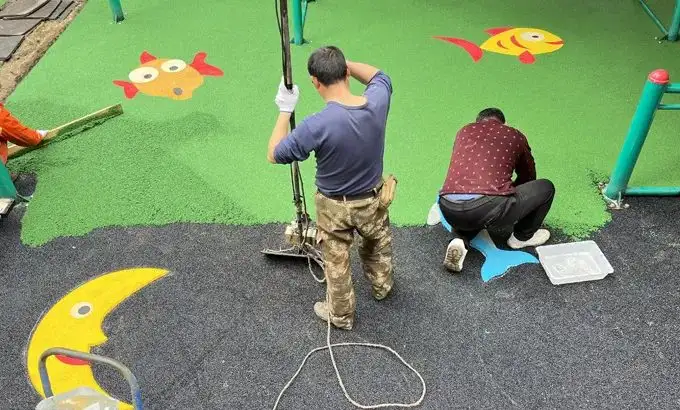
FieldsMaster helps make that process easier. Buyers can begin with the project information already available — an area, drawing, color direction, thickness note or application — and FieldsMaster can help organize the material scope around EPDM granules, a compatible PU binder and the quantity logic used for quotation. Project owners can also use the EPDM surfacing guide for project owners to connect the material decision with the wider project plan.
Quick answer: EPDM wet pour is an in-situ surfacing method in which measured EPDM granules and PU binder are mixed on site, spread over the prepared surface and compacted into a seamless Top Layer. It performs especially well on curved layouts, color zones and custom graphics. Material quantities and cost should be planned from the actual area, layer thickness, selected binder route, Base Layer scope and site conditions — not from one universal installed-price figure. The FieldsMaster EPDM material calculator provides an initial reference; FieldsMaster can then turn the project inputs into a granule-and-binder material schedule for quotation.
1. What Is EPDM Wet Pour and Where It Performs Best
Wet pour is created at the project site rather than supplied as a finished tile or roll. The installer weighs the granules and binder, mixes them into a consistent coated blend, places the mix within the working area, then levels and compacts it before curing.
That process gives designers and contractors useful flexibility:
- Irregular layouts: curves, islands and narrow transitions can be formed without cutting many fixed modules.
- Playground zoning: color can separate movement routes, equipment zones and quieter activity areas.
- Custom graphics: shapes and patterns can be planned within the continuous surface.
- Transitions and edges: in-situ placement can follow project-specific boundaries and adjacent finishes.
- Localized repair planning: defined areas can be cut out and reinstated, although color and texture matching should be planned against the original batch and sample.
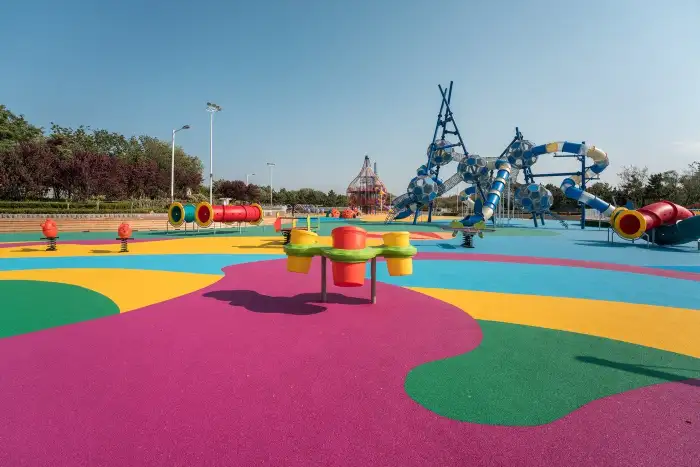
For the end user, the finished surface should feel continuous and easy to read. For the buyer, the advantage is control: colors, areas and material quantities can be tied to the plan before ordering. FieldsMaster can support this by moving from color-card selection to the Color Mix Tool, physical sample confirmation, preliminary quantity planning and batch coordination.
Wet pour is widely considered for playgrounds, schools, public parks, recreational areas, pool surrounds and selected sports or landscape zones. The final structure still needs to reflect the project's use, substrate, drainage, impact requirements and local specification. For the playground side of that scope, see the children playground surfacing solutions.
2. EPDM Wet Pour Rubber Granules: Size, Binder Selection and Mixing
A successful wet-pour order is built around compatible inputs rather than EPDM granules alone. The particle-size range affects packing and surface texture; the PU binder choice affects budget and color appearance; accurate batch control helps the installer work consistently.
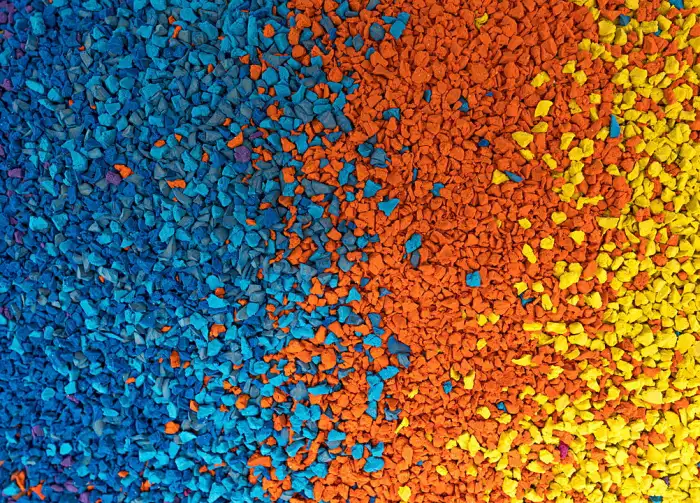
FieldsMaster controls its standard EPDM granules within a 1.0–3.5 mm range with no dust inside. For a specific project, FieldsMaster can help match the selected series and particle-size direction to the intended Top Layer, texture, thickness and application; the children playground granule series shows how those ranges are organized by application.
2.1 Choose the PU Binder Around Budget and Color Expectations
The more useful first decision is what the finished surface needs to achieve. FieldsMaster then matches the binder guidance to the selected materials and project conditions.
| FieldsMaster option | Best suited to | Customer value |
|---|---|---|
| FM-PU 8004 aromatic PU binder | Standard wet-pour projects where cost control is a priority and no special anti-yellowing requirement is specified | A more economical and practical first choice for many conventional color and budget plans |
| FM-PU 1185 aliphatic PU binder | Projects with higher anti-yellowing expectations, particularly light colors or appearance-sensitive areas | Helps protect the intended visual direction where binder yellowing would be a concern |
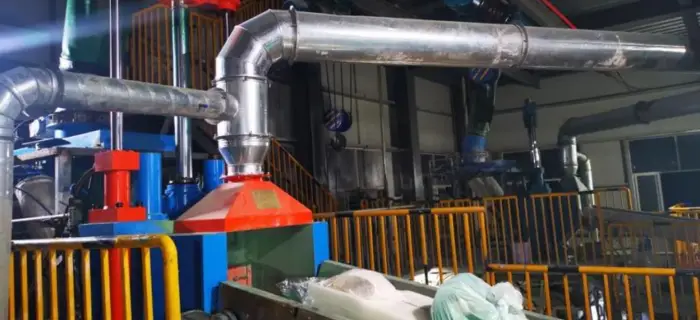
FieldsMaster can review the application, color direction, exposure conditions and budget, then recommend the more suitable binder route and provide the corresponding addition guidance with the project material proposal. For related material context, see the PU binder range.
2.2 Installation Planning: Keep Material and Site Responsibilities Clear
FieldsMaster can provide the selected EPDM granules, PU binder route and project material guidance so the installer has a clearer material basis before work begins. Actual substrate preparation, mixing, paving, curing protection and opening decisions remain with the installer and project team, who can assess the real site, weather and construction conditions.
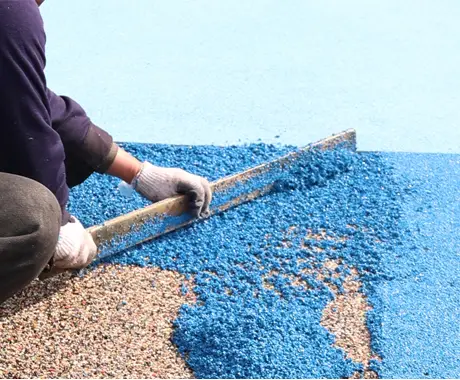
For scheduling, 48–72 hours for natural curing can be used as a planning reference, subject to temperature and humidity. The completed surface can be opened when the installer and project team have reviewed the actual site conditions. FieldsMaster's installer resource page covers the material-handling side of that handover.
2.3 How FieldsMaster Makes Wet-Pour Material Decisions Easier
A wet-pour project should not become a factory-audit exercise for the buyer. FieldsMaster starts by turning the information already available into a clearer material direction.
If the project begins with a color image, FieldsMaster helps move it from a digital direction to a mix preview and then a physical sample reference. This gives the purchasing, design and installation teams one color basis before a batch is planned.
If the project begins with an area or drawing, FieldsMaster separates the EPDM Top Layer, possible Base Layer and site-side work. The customer receives a material scope that makes it easier to compare quotations without discovering later that two prices cover different things.
If the project is budget-led, FieldsMaster recommends the more economical FM-PU 8004 aromatic route for conventional wet-pour work. If a light color or appearance-sensitive area needs stronger anti-yellowing control, FieldsMaster can assess FM-PU 1185 instead. The point is to match the binder decision to the visual expectation before the order is placed.
Once the direction is confirmed, FieldsMaster organizes the preliminary granule and binder quantities, relevant material information, packaging and delivery inputs around the project. A plan, total area, color image, thickness note or destination is enough to begin; FieldsMaster helps organize what follows.
3. Wet Pour Cost per Square Meter and Material Quantities
A wet-pour budget changes with the actual country, layer structure, thickness, Base Layer, substrate preparation, drainage, graphics, PU binder, freight, duties, labor and site access. A broad installed-price range cannot replace a project calculation or a FieldsMaster material quotation.
Instead of asking customers to build the calculation from scratch, FieldsMaster provides the EPDM material calculator as a simple starting point. Enter the available project inputs to get an initial material reference, then send the result, drawing or area to FieldsMaster.
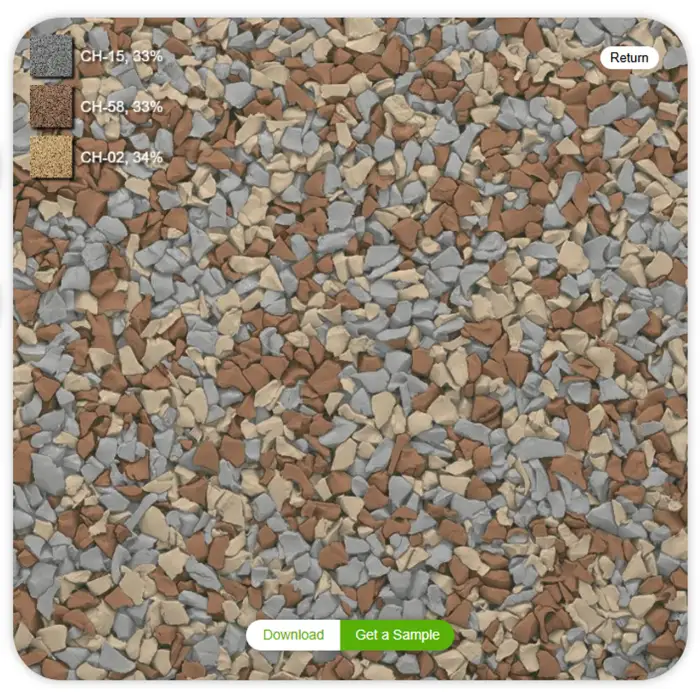
For a 1,000 m² wet-pour enquiry — or any other project size — FieldsMaster turns that starting point into a practical material brief. It separates the Top Layer, possible Base Layer and site-side scope; recommends the binder route around budget and anti-yellowing expectations; organizes preliminary quantities; and connects color, packaging and destination before quotation.
That means the buyer receives a clearer basis for internal budget approval and quotation comparison, while the installer receives a more coordinated material direction. If the area, thickness or color layout changes, FieldsMaster updates the brief instead of asking the project team to rebuild the material logic from the beginning. Completed wet-pour installations are listed in the project references.
4. Common Wet-Pour Failures and How to Reduce Them
Most wet-pour problems trace back to a few repeatable process points rather than to the material alone.
4.1 Binder Addition Drifts Between Batches
What happens: some batches are binder-rich while others are under-coated, creating differences in texture, cure and surface behavior.
Better control: FieldsMaster can provide the project-specific addition guidance for the selected materials; the installer can then pre-weigh repeatable batches and keep that instruction consistent across the defined area.
4.2 Reversing the Mixing Sequence
What happens: binder can pool, coat unevenly or leave sticky areas.
Better control: add the measured PU binder into the pre-weighed granules and mix until the particles are evenly coated.
4.3 Overmixing or Delayed Placement
What happens: excess air, shortening working time or inconsistent compaction can affect finish quality.
Better control: standardize the mixer load, mixing endpoint, movement route and paving area before the first batch.
4.4 Weak, Dirty or Wet Base Conditions
What happens: bonding problems, bubbling, ponding or local movement may appear after installation.
Better control: the contractor should confirm substrate strength, cleanliness, level, moisture, drainage and primer requirements before mixing begins.
4.5 Opening the Surface Too Early
What happens: footprints, dents, contamination or surface damage can occur before the binder has cured.
Better control: protect the area and use the 48–72 hour FieldsMaster guidance as a planning range, then let the installer confirm readiness from actual temperature, humidity and cure.
4.6 Ordering Color Without a Physical Reference
What happens: screen settings and lighting can produce small visual differences.
Better control: use the Color Card or Color Mix Tool to choose a direction, then confirm a physical sample before the quotation and batch plan are finalized.
5. Why EPDM Granules Give Wet-Pour Projects More Freedom Than Prefab Tiles or Rolls
EPDM wet pour begins with EPDM granules, not a fixed module. This gives the material plan room to follow the actual drawing, rather than asking the drawing to fit a fixed product size.
| Project decision | EPDM wet pour with EPDM granules | Prefab tiles or rolls |
|---|---|---|
| Curves and irregular boundaries | Can be planned around the real site outline, including curves, islands and narrow transitions | Usually needs cutting and fitting around available module or roll dimensions |
| Graphics and color transitions | Color zones, playground graphics and logos can remain part of the material plan | Design is more likely to be simplified around repeated pieces, cuts or joins |
| Finished visual | Creates a continuous in-situ surface across the planned area | Module edges or roll seams remain part of the finished surface |
| When the layout changes | FieldsMaster can update the granule, binder and quantity brief around the revised drawing | The module layout may need to be reworked around new cuts, joints and dimensions |
| Best project fit | Irregular spaces, design-led play areas and projects seeking a continuous visual result | Repeatable rectangular areas where standard module sizes and visible seams are acceptable |
For the buyer, the advantage is not simply more customization. It is fewer design compromises before ordering: the selected EPDM granules, binder route and material brief can be built around the space that will actually be installed.
Wet pour still involves coordinated site installation and curing. Where design freedom, continuous appearance and control around an irregular layout are priorities, EPDM granules offer the stronger starting point. Prefab tiles or rolls may remain suitable for simple, repetitive layouts that accept their fixed format. For the wider wet-pour material discussion, see wet pour rubber as a durable playground solution.
6. FieldsMaster Support That Moves the Wet-Pour Project Forward
FieldsMaster's role is not limited to sending a granule price. The aim is to help the buyer reach a purchase decision with fewer gaps between design, procurement, installation and delivery.
- Before quotation: FieldsMaster helps separate Top Layer, Base Layer and site-side items, so the buyer knows what is and is not included.
- Before color approval: FieldsMaster connects digital selection with a physical sample reference, giving purchasing and design teams one basis for sign-off.
- Before ordering: FieldsMaster recommends the binder route around budget and anti-yellowing needs, then organizes the preliminary granule and binder quantities in the material proposal.
- Before shipment: FieldsMaster aligns the confirmed color, quantity, packaging and destination, making storage and delivery discussions easier for the project team.
- When the project changes: FieldsMaster can update the material brief when area, thickness or color layout changes, reducing the need to rebuild the order from the beginning.
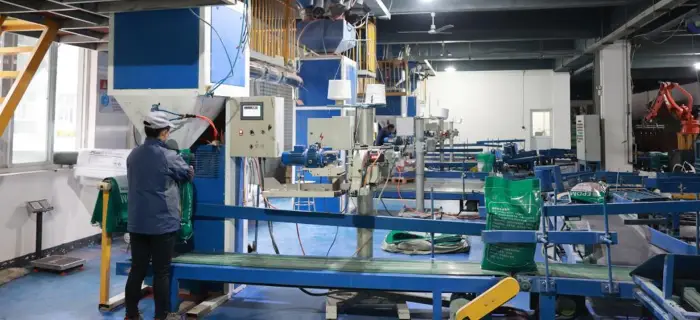
A wet-pour enquiry does not need to begin with a complete specification. FieldsMaster can start from a drawing, total area, application, color direction, thickness note or delivery destination and help turn it into a clearer material path. The product catalog lists the granule and binder ranges, and the manufacturing capability page covers the production and capacity side behind the material brief.
FieldsMaster can organize the granules, compatible binder option, preliminary quantity and quotation in one conversation, helping the project team spend less time reconciling separate material messages. Final substrate design, drainage, installation method, site safety and local compliance remain coordinated with the project designer and contractor. Material-level documentation, including certifications and test references, is provided against the selected product; for the broader playground material picture, see EPDM granules playground surfaces and the playground safety surface guide.
7. FAQ
What is the difference between wet pour and EPDM granules?
EPDM granules are a material. Wet pour is an installation method that combines measured granules with PU binder on site, then spreads and compacts the mixture into an in-situ surface. Buyers can purchase EPDM granules alone or coordinate granules and binder for a wet-pour material scope.
How much binder is needed for wet pour EPDM?
Binder addition is confirmed against the selected FieldsMaster PU binder, granule series, layer design and site conditions. FieldsMaster provides the relevant project guidance with the material proposal rather than publishing one universal ratio. For selection, FM-PU 8004 is the more economical choice for conventional wet-pour projects, while FM-PU 1185 is intended for projects with higher anti-yellowing expectations.
How long before a wet-pour surface can be used?
A 48–72 hour natural-curing window can be used for planning, depending on temperature and humidity. The opening time can be confirmed by the installer after reviewing the selected binder and actual site conditions.
How can a buyer estimate wet-pour material quantities?
Share the available area, layer note or drawing with FieldsMaster. FieldsMaster can organize the preliminary EPDM granules and PU binder quantities, separate any Base Layer scope, and align the estimate with color, packaging and destination. The material calculator can be used as an initial reference; FieldsMaster then includes the applicable binder guidance in the project material proposal.
Is EPDM wet pour suitable for irregular shapes?
Yes. Because the material is mixed and placed on site, wet pour can follow curves, transitions, color zones and graphics more easily than many fixed-size modules. Edge details, substrate preparation and installer workmanship still need project-level confirmation.
Choose the route that matches your current stage. A wet-pour enquiry does not need a complete specification — it needs the inputs you already have:
- EPDM granules only — Products Quotation lets FieldsMaster follow up on color, particle size, quantity, packaging and destination.
- Need to see the selected color in the real material — free samples support physical confirmation before the order is finalized.
- Need granules, PU binder and preliminary quantities together — Project Quotation connects the available area or drawing with layer inputs and delivery planning.
Send the area, drawing, color direction and destination, and FieldsMaster can return a granule-and-binder material brief — including the layer split and documentation scope — within 48 hours, so the binder route is settled before the first batch is mixed.