EPDM Playground Safety Surface: Critical Fall Height and HIC Guide
- Share
- publisher
- FieldsMaster Technical Team
- Issue Time
- Oct 14,2026
Summary
Plan an EPDM playground safety surface around fall height and HIC-related requirements: read critical fall height, HIC and g-max as project-control data, turn 1.5 m to 3 m equipment fall-height inputs into material inputs, compare wet-pour EPDM, tiles and loose fill, and assemble the EN 1177, ASTM F1292, AS 4422, EN 71-3, REACH and PAHs material documents a project file needs. Includes quotation-ready inputs for project owners, landscape contractors and distributors.
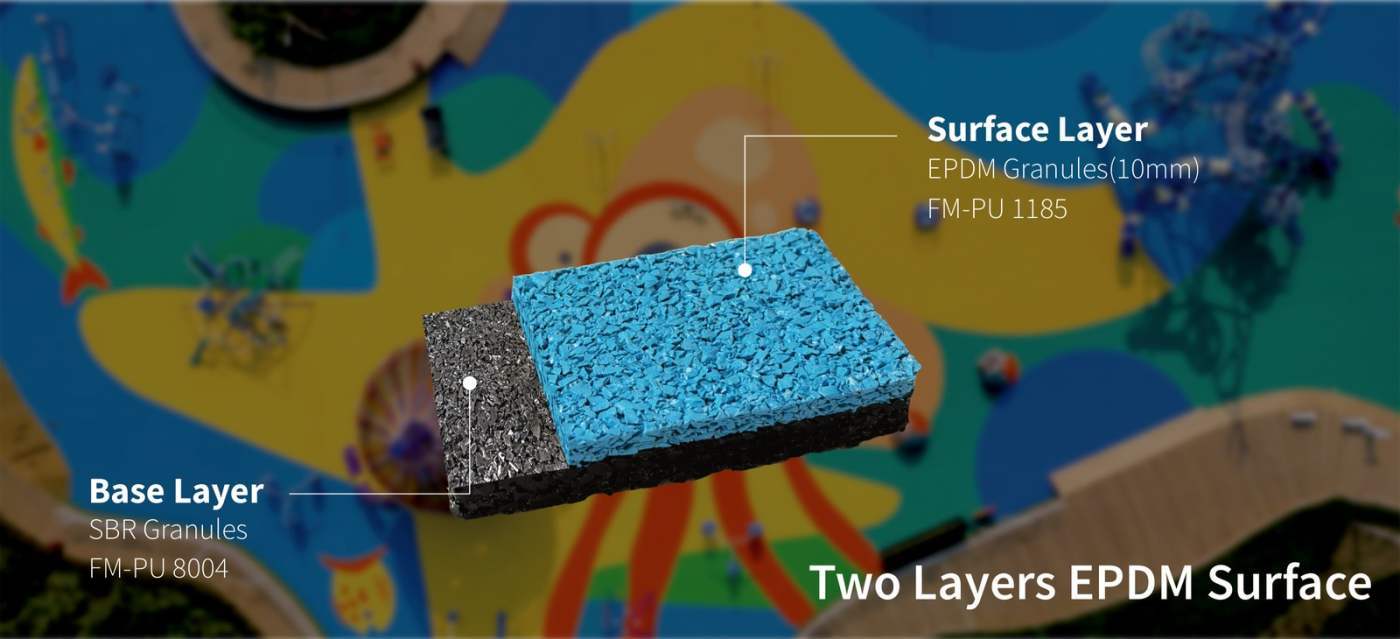
An EPDM playground safety surface is procured as a material package rather than as a finished product: colored EPDM granules for the wear layer, PU binder, the Base Layer material, the color sample and the HIC-related material documents the project file asks for. For a child using a slide, swing or climbing structure, the safety question is immediate: does the impact zone beneath the equipment match the fall-height requirement of that zone? Project owners, landscape contractors and distributors should not have to turn that question into a material plan alone.

FieldsMaster helps connect the available equipment information, impact areas, HIC / critical-fall-height requirements and material records so the project can move toward quotation and handover with greater clarity. FieldsMaster has supported EPDM material projects for more than 30 years. That experience is applied where customers need it most: turning equipment information into a clearer material plan, identifying which documents relate to the proposed materials, and keeping color, quantity and delivery discussions connected. Buyers can begin with EPDM granules, PU binder or the broader children playground surfacing solutions; FieldsMaster can then help narrow the material scope around the actual project.
Quick answer: A compliant EPDM playground safety surface is not selected from a generic thickness chart. FieldsMaster can start with the equipment fall-height information already available, help organize the proposed Base Layer, EPDM Top Layer and PU binder inputs, and provide the relevant HIC-related material information for project review. The final structure is then confirmed against the selected system, project drawings, installation conditions and applicable requirements.
1. Turn Fall-Height Requirements into a Clear Material Plan
A playground may include low platforms, swings, climbing equipment and higher-risk fall zones in the same plan. Children experience one continuous play space, while the project team has to make sure that each relevant zone is supported by an appropriate surface decision.
This is often where buyers face uncertainty: the equipment supplier provides fall-height information, the project document names HIC or a local standard, and the surfacing quotation still needs materials, areas and documentation to line up. FieldsMaster helps connect these pieces so the customer can move forward with fewer repeated confirmations.
For an EPDM granules-only order, FieldsMaster can support color, particle-size range, sample confirmation, quantity and delivery planning through its children playground granule series. When the project also needs PU binder, Base Layer inputs or HIC-related coordination, FieldsMaster can help organize those items into the same material discussion.
1.1 Start with the Information Already Available
A complete specification is not required for the first conversation. A drawing, equipment list, fall-height note, area estimate or even a marked-up plan can be enough to begin. FieldsMaster can help sort the available information and identify what still needs confirmation.
- If an equipment list is available, FieldsMaster can help connect the relevant fall-height notes to the material discussion.
- If only a drawing or area is available, FieldsMaster can begin a preliminary quantity and color review using the EPDM material calculator.
- If the project names HIC, EN 1177, ASTM F1292 or AS 4422, FieldsMaster can provide the related material information available for review and clarify its scope.
- If the purchase is EPDM granules only, FieldsMaster can keep the process focused on color, particle size, sample, quantity, packaging and delivery.
Final system selection, site preparation, installation and project compliance are confirmed by the project team according to the drawings, specified system and local requirements.
2. Read HIC Data as a Project-Control Tool, Not a Stand-Alone Number
A project customer does not need a glossary before requesting a quotation. The practical question is: can the report and material scope be traced to the equipment zone and surface structure in this project?
- Critical Fall Height (CFH) states the impact-attenuation height rating of a tested surface system. It must be read with the equipment fall-height information and the exact tested structure.
- HIC is a measurement used in impact-attenuation assessment. When it appears in a project requirement, FieldsMaster can provide the available HIC-related material or system information and help explain how its scope relates to the proposed application.
- g-max records peak acceleration during impact testing. It should be reviewed with HIC, the stated test method, construction and project acceptance criterion.
The commercial risk is straightforward: a value copied from a report for one Base Layer, thickness, Top Layer, binder or substrate cannot simply be placed into another project file. FieldsMaster helps customers avoid that mismatch by organizing the material-side description before a report request: selected EPDM granules, intended layer inputs, particle-size range, color, quantity and project application.
| Checkpoint | Buyer decision | FieldsMaster action |
|---|---|---|
| Test standard or project criterion | Confirm the framework and required report format | Align the material-document request with the stated project criterion |
| Tested construction | Compare Base Layer, Top Layer, PU binder and substrate scope | Identify the proposed material inputs that need to be described consistently |
| Critical fall height or impact scope | Link the equipment-zone data to the surface requirement | Use the zone plan and area data for preliminary material planning |
| Test report identity and date | Retain traceable evidence for the project record | Keep requested material and batch references aligned with the order |
| Installation and site conditions | Review base, drainage, moisture and curing inputs | Clarify what remains for contractor and project-level confirmation |
For an existing FieldsMaster HIC-related material reference, see HIC-certified soft fall rubber surfaces.
3. Critical Fall Height Playground Surface: From Equipment Data to Material Inputs
A project may list equipment with fall-height information of 1.5 m, 2 m, 2.5 m or 3 m. Those figures are important inputs, but they are not universal instructions for a fixed wet-pour thickness.
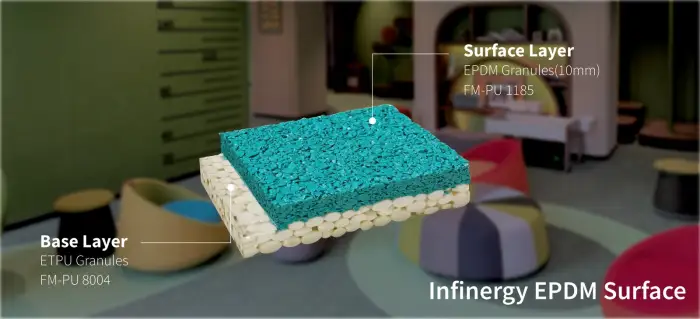
The following table shows the correct procurement action at each height range. The required construction must follow the specified and tested system rather than a generic thickness figure.
| Equipment fall-height input | Project question | Materials and records to prepare | FieldsMaster material-side support |
|---|---|---|---|
| 1.5 m | Which zone and impact-attenuation criterion apply? | Equipment schedule, zone area, proposed surface scope | Discuss EPDM granules, Base Layer input, PU binder and document request |
| 2 m | Does the specification require a defined HIC or CFH document? | Project requirement, report format, installation environment | Help identify relevant material documentation for review |
| 2.5 m | Does the selected structure match the project's tested-system requirement? | Proposed layer schedule, Base Layer option, Top Layer, site conditions | Organize preliminary material inputs and quantity discussion |
| 3 m | Are higher fall-height zones separated clearly in the layout and project documentation? | Equipment-zone plan, required performance, installation and inspection records | Support material scope review; final system decision remains subject to project confirmation |
3.1 How FieldsMaster Helps Move an HIC-Related Enquiry Forward
- Begin with the equipment information already available. FieldsMaster can help identify which fall-height notes and impact zones affect the material discussion.
- Connect the project requirement. When HIC, critical fall height, EN 1177, ASTM F1292, AS 4422 or another requirement is named, FieldsMaster can help organize the related material information for review.
- Keep the purchase scope flexible. The discussion can stay focused on EPDM granules or expand to PU binder, Base Layer and wet-pour material inputs when the project needs them.
- Build a clearer material picture. Drawings, area information, colors and destination details can be added as they become available; FieldsMaster can help turn them into preliminary quantity and quotation inputs.
- Support a confident project decision. The customer receives a clearer material scope and document trail for confirmation with the project team, installer and applicable requirements.
This approach reduces repeated questions without turning a general thickness reference into an unsupported safety conclusion.
4. Play Safety Surfaces: EPDM, Wet-Pour Rubber, Tiles and Loose Fill Compared
Play safety surfaces are selected around fall-height requirements, maintenance capacity, design needs, accessibility, site drainage, installation approach and project documentation. The table below is an initial procurement comparison; it does not replace a project-specific impact-attenuation assessment.

| Surface option | Procurement focus | Design and access planning | Maintenance and record needs | Documentation question |
|---|---|---|---|---|
| Wet-pour EPDM surface | EPDM Top Layer, PU binder, Base Layer, layer schedule, color and installation inputs | Multi-color zones, continuous transitions and graphic integration | Inspect edges and high-use areas; keep approved material records | Does the selected tested-system scope match the project requirement? |
| Prefabricated rubber tiles | Tile thickness, joint layout, adhesive, edge treatment and replacement stock | Modular layout; pattern depends on the tile range | Inspect joints, edges and replacement compatibility | Which tile assembly and substrate are covered by the project documentation? |
| Loose-fill surfacing | Loose-fill material type, depth, containment and replenishment plan | Natural appearance; accessible-route requirements need separate review | Rake, redistribute, replenish and manage migration | How will installed depth and maintenance records be checked? |
| Other wet-pour rubber constructions | Base material, visible layer, binder and tested-system description | Varies by structure and finish | Review surface wear, separation and repair compatibility | Is the proposed construction clearly identified in the relevant documents? |
For a broader comparison of playground surfacing safety options, review the surface type, installation approach and project requirement together.
4.1 Playground Soft Fall Install SWMS and Site Documentation
A site document such as a Safe Work Method Statement (SWMS), where required by the project or local rules, is an installation-management document. It is different from a HIC or impact-attenuation test report.
For soft-fall installation planning, the contractor and project team should address the applicable site procedures, base condition, drainage, substrate cleanliness, moisture, weather, mixing and curing requirements, access controls, equipment handling and inspection records. FieldsMaster can provide material-related inputs such as EPDM granule selection, PU binder information, Base Layer material scope, sample reference and requested material documentation. The contractor remains responsible for installation planning and site controls; the installer resource page covers the material-handling side.
5. Safety Surface Uses Beyond Playgrounds: Schools and Public Parks
Schools, public parks and community spaces often combine play equipment with routes, gathering zones, themed areas and adjacent landscaping. A material enquiry becomes clearer when the layout distinguishes impact zones from circulation, seating or general-use areas.

Any of the following can help start the discussion; customers do not need to have every item ready:
- An equipment schedule or fall-height note for the relevant play zones.
- A site plan showing impact zones, paths, graphics, transitions or total surface area.
- Available information about the base, drainage or intended installation period.
- A preferred EPDM granule color, particle-size direction or color card reference.
- A note showing whether the current interest is EPDM granules only or also includes PU binder and Base Layer inputs.
- Any project-document reference or delivery destination already known.
FieldsMaster can help organize the available information into an EPDM granules order or a broader material discussion. For color, sample and graphic planning, see EPDM Granules Playground Surfaces: Color, HIC & Samples, and for themed layouts use the FieldPlayful 2D / 3D EPDM graphic options.
6. Material Documents FieldsMaster Can Provide for Project Review
The useful document set depends on the project specification, market and proposed material scope. FieldsMaster helps customers focus on information that relates to the selected materials and specified system, instead of leaving them to sort through generic certificates without a clear connection to the project.

| Document or record | Procurement purpose | Information to match |
|---|---|---|
| HIC / impact-attenuation or critical fall height report | Review impact-attenuation evidence for the specified structure | Tested construction, thickness, substrate, test method, report scope and project criterion |
| EN 1177-related documentation | Review a European impact-attenuating-surface requirement when specified | Version, testing approach, system and project applicability |
| ASTM F1292-related documentation | Review a North American impact-attenuation requirement when specified | Test configuration, project requirement and report scope |
| AS 4422-related documentation | Review an Australian playground-surfacing requirement when specified | Project location, applicable edition, equipment and surface scope |
| Material chemical references | Review material-level requirements such as EN 71-3, REACH or PAHs when specified | Selected material, color, particle-size range and required scope |
| UV / weathering material references | Review selected material data for outdoor exposure-related procurement requirements | Product scope, test method and report applicability |
| Installation and handover records | Support traceability of the installed project | Contractor records, approved materials, lot references and maintenance information |
6.1 FieldsMaster Provides Material Reports and Data Support
FieldsMaster can provide available material information for the selected EPDM granules, including relevant EN 71-3, REACH, PAHs, UV ISO 4892-3 and Weathering ISO 4892-2 references (see certifications and test references). When a playground project includes HIC or critical-fall-height requirements, FieldsMaster can also help match the available material and system information to the proposed application for project review.
Customers do not need to determine the document category alone. Share the selected color or application information already available, and FieldsMaster can help identify which material documents are relevant and explain their scope. If drawings, equipment information or layer requirements are available, Project Quotation provides a direct route for coordinated review, and project support covers the documentation and coordination scope.
7. Request an EPDM Playground Safety Surface Material Review
Once the material direction is clear, FieldsMaster keeps the next steps practical: confirm the sample, calculate the material scope, coordinate the quotation and plan delivery around the project schedule. Manufacturing and delivery capacity work in the background so the customer can stay focused on the project rather than managing disconnected material conversations.
The project references page shows how completed playground surfaces look in service, and the product catalog lists the granule and binder ranges available for specification. For a full material-and-structure overview, review EPDM granule for children playground.
8. Technical Review
Technical review by Master Gong, Head of Laboratory at FieldsMaster. This review focuses on translating buyer inputs into a material discussion: EPDM granule color and particle-size range, sample confirmation, PU binder and Base Layer inputs where required, preliminary material quantities, and requested material-document categories. Final system selection, testing applicability, installation decisions and project compliance remain subject to project drawings, specified systems, report scope and applicable requirements.
9. FAQ
What is critical fall height for playground surfaces?
Critical fall height is used to describe the impact-attenuation height rating of a tested surface system. It should be reviewed with the equipment fall-height information, tested construction and applicable project requirement.
What thickness of EPDM is needed for a 2 m fall height?
A 2 m equipment fall-height input does not produce one universal EPDM thickness. The EPDM Top Layer and the impact-attenuation Base Layer must be selected and confirmed within the specified and tested system for the project.
Which safety surface standards apply to playgrounds?
The applicable framework depends on the project location and specification. EN 1177 is commonly referenced for impact-attenuating playground surfacing in European projects; ASTM F1292 may be specified in North American projects; and AS 4422 may be referenced for Australian playground surfacing. The current project requirement, applicable standard edition and report scope are confirmed by the project team.
What does HIC-certified playground surfacing mean?
The phrase should be checked carefully. A material document, or a report written for one construction, does not automatically apply to every installed playground surface; the tested construction, test method and stated scope are what the project file needs to line up with.
Choose the support route that matches your current stage. A useful material review does not need a finished specification — it needs the inputs you already have:
- EPDM granules only — Products Quotation follows up on the application, color, particle-size range, quantity and destination.
- Need to see the real granule color before ordering — free samples support physical color confirmation once a color or mix direction is selected, and the Color Mix Tool helps set that direction.
- Already have fall-height notes, equipment information, drawings or layer requirements — Project Quotation connects those inputs with coordinated material support.
Send the equipment schedule, the affected zone areas, the named HIC or fall-height criterion and the delivery location, and FieldsMaster can return a layer-by-layer material review within 48 hours — including the granule, binder and Base Layer quantities that the project file needs to line up.